
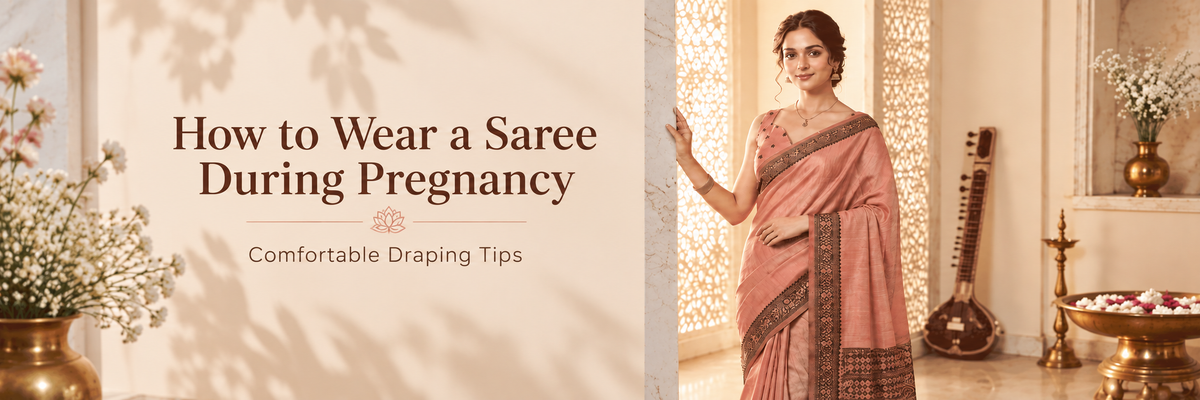
How to Wear a Saree During Pregnancy: Comfortable Draping Tips
Can you wear a saree during pregnancy? Absolutely. For many pregnant women, a saree can be a beautiful and comfortable choice for a baby shower, wedding, festive celebration, family gathering, maternity photoshoot, or even an office event.
The key is choosing a saree that works with your changing body rather than one that requires you to adjust your body to the garment. A comfortable waistband, lightweight fabric, easy-to-manage pleats, secure pallu, and minimal layers can make a significant difference as pregnancy progresses.
So, how do you wear a saree during pregnancy comfortably? The answer lies in choosing the right fabric, avoiding unnecessary pressure around your abdomen, and opting for a drape that allows you to sit, walk, and move freely.
Can You Wear a Saree During Pregnancy?
Yes. Many women can wear a saree comfortably during pregnancy, provided it is worn in a way that does not feel restrictive around the abdomen and allows comfortable movement. The most important consideration is comfort rather than achieving a tightly fitted traditional drape.
When choosing a saree during pregnancy, consider:
- Lightweight, breathable fabrics
- A flexible and adjustable waistband
- Enough room for comfortable movement
- Pre-arranged and easy-to-manage pleats
- A securely pinned pallu
- Comfortable footwear
- Fewer layers
How to Wear a Saree During Pregnancy: Step-by-Step
If you're wondering how to wear a saree while pregnant, these simple steps can make getting dressed easier and more comfortable.
Step 1: Start With Comfortable Innerwear
Choose breathable innerwear that doesn't feel restrictive around your waist or abdomen.
Avoid trying to create an extremely fitted silhouette if it makes you uncomfortable. During pregnancy, comfort should take priority over achieving a particular shape.
Step 2: Choose a Lightweight Saree
The fabric you choose can make a noticeable difference, particularly if you'll be wearing the saree for several hours.
Cotton, georgette, and lightweight silk can be comfortable options depending on the season, occasion, and your personal preference. For a long event, breathable and relatively lightweight fabrics are generally easier to manage than very heavy or stiff sarees.
Step 3: Keep the Waist Comfortable
One of the most important considerations when wearing a saree during pregnancy is the waistband.
Avoid tying the saree so tightly that it creates pressure or makes sitting and moving uncomfortable. You should be able to walk, sit, breathe, and move without feeling constantly restricted.
An adjustable waistband can be particularly useful because your comfort and measurements may change throughout pregnancy and even over the course of a day.
Step 4: Keep the Pleats Neat and Manageable
Traditional saree draping requires you to create, align, and repeatedly adjust several pleats.
During pregnancy, especially as your bump grows, bending repeatedly while getting dressed can become tiring.
Pre-arranged pleats can eliminate much of this effort while maintaining the structured appearance of a traditional saree.
Step 5: Secure the Pallu
Pinning your pallu securely can prevent repeated adjustments while you're walking, sitting, greeting guests, or moving around during an event.
Choose a comfortable pallu length and make sure the pins don't pull or create discomfort.
Step 6: Choose Comfortable Footwear
For long events, prioritise stability and comfort. Supportive flats or footwear you're already comfortable walking in can be more practical than very high heels, particularly when you'll be standing or walking for extended periods.
Common Challenges of Wearing a Saree During Pregnancy
Pregnancy changes your body throughout the nine months, so the challenges of wearing a saree can change too. Here's how to make some of the most common ones easier.
1. Getting Ready Can Feel More Tiring

Traditional saree draping can involve 15–20 minutes of making pleats, adjusting the waistband, arranging the pallu, checking the fall, and repeatedly bending to get the drape right.
As pregnancy progresses, that preparation itself can become tiring. A pre-pleated ready-to-wear saree can simplify this process because the pleats are already arranged and stitched.
That's one of the ideas behind Aseem sarees. The pre-arranged pleats allow the saree to be worn in approximately 15 seconds, giving you the appearance of a traditionally draped saree without having to create the pleats from scratch.
Less time getting dressed can also mean less standing and bending before you even leave for your event.
2. Your Waist May Start Feeling Restrictive

As your baby bump grows, a waistband that once felt comfortable may begin to feel restrictive.
There's also another factor: what feels comfortable when you first get dressed may feel different after you've been sitting, walking, eating, or standing for several hours.
A flexible fit can help.
Aseem sarees feature customised stitching, an adjustable elastic waistband, and a drawstring with hook-and-loop closure. These construction details allow the fit to be adjusted according to your comfort rather than relying on a fixed, tightly tied waistband.
3. Your Baby Bump Changes the Way the Saree Falls

Your body doesn't remain the same throughout pregnancy. As your baby bump grows, the saree that felt perfectly proportioned earlier in pregnancy may feel different later.
Aseem offers height adjustment hooks that are discreetly placed behind the pleats. They allow you to adjust the height of the saree without changing its stitching.
If you would like this feature, mention it in the order notes while placing your order. The Aseem team can then get in touch with you regarding the requirement.
This can be especially useful when your preferred saree height changes as your pregnancy progresses.
4. Multiple Layers Can Become Inconvenient

Traditional sarees involve multiple layers that need to be arranged and managed throughout the day.
During pregnancy, this can become particularly inconvenient when you're sitting down, changing position, or making frequent restroom visits. An attached lining can reduce the need to manage separate layers.
Aseem sarees have an attached lining, so you do not need to wear a petticoat. This helps simplify the process of getting dressed and reduces the amount of readjustment required throughout the day.
5. You May Want Your Essentials Close By

Pregnancy can mean carrying a few additional essentials, from your phone and tissues to lip balm, a small snack, or other personal items.
A handbag isn't always convenient when you're moving around at an event.
Aseem sarees include a hidden pocket with a concealed magnetic closure, giving you a discreet place to keep small essentials while maintaining the clean appearance of the saree.
Which Saree Is Best During Pregnancy?
The best saree during pregnancy is the one that feels comfortable for your body and the occasion. When choosing one, consider:
1. Fabric
Choose a fabric that feels comfortable against your skin and isn't unnecessarily heavy, especially if you'll be wearing it for several hours.
2. Waistband
Look for a waistband that offers flexibility rather than one that has to be tied tightly.
3. Pleats
Pre-arranged or pre-pleated sarees can reduce the effort involved in getting dressed and minimise repeated bending.
4. Weight
A lightweight saree can be easier to manage during long events than a particularly heavy saree.
5. Layers
An attached lining can make the saree easier to wear without having to manage multiple separate layers.
6. Practical Features
A hidden pocket is useful when you want to keep small essentials close without carrying a handbag everywhere.
Best Saree Fabrics During Pregnancy
There isn't one universally best saree fabric for every pregnant woman. Your comfort, the weather, the occasion, and your personal fabric preference all matter
Some options worth considering include:
- Cotton: Breathable and practical, particularly for daytime events and warmer weather.
- Georgette: Lightweight and fluid, making it a popular choice when you want an elegant drape without a particularly heavy saree.
- Lightweight silk: Useful when you want a more traditional or festive appearance while still avoiding excessively heavy fabrics.
For weddings, baby showers, and festive celebrations, choose a fabric that gives you the look you want without making you feel weighed down.
How to Choose a Saree for Your Baby Shower During Pregnancy
A baby shower is one of those occasions when you may want to dress traditionally while also prioritising comfort. A good baby-shower saree should ideally be:
- Comfortable enough to wear for several hours
- Easy to put on
- Flexible around the waist
- Light enough to move around in
- Secure enough that you don't need constant adjustments
- Practical enough to let you keep your essentials close
A ready-to-wear saree can be particularly convenient for this kind of occasion because the pleats are already arranged and the drape requires less preparation.
If you're expecting your baby shower to involve sitting, greeting guests, photographs, and moving between different parts of the venue, comfort becomes just as important as the appearance of the saree.
Why a Ready-to-Wear Saree Can Be More Comfortable During Pregnancy
A traditional saree isn't uncomfortable simply because you're pregnant. The challenge is often the amount of adjustment involved in putting it on and keeping it in place. A ready-to-wear saree can simplify that process.
With Aseem Shakti, several features work together:
Pre-arranged Pleats
The pleats are already stitched into position, reducing the effort involved in creating and arranging them.
Customised Stitching
Each saree is customised to your measurements, creating a more personalised fit.
Adjustable Elastic Waistband
The elastic waistband offers flexibility when your comfort requirements change.
Drawstring With Hook-and-Loop Closure
This provides an additional way to secure and adjust the fit.
Height Adjustment Hooks
Available on request, these discreet hooks behind the pleats can help adjust the saree's height without altering its stitching.
Attached Lining
The attached lining reduces the need to manage a separate petticoat underneath the saree.
Hidden Magnetic Pocket
The concealed pocket provides space for small essentials without changing the saree's elegant appearance.
Together, these details are designed around one simple idea: you shouldn't have to sacrifice comfort to enjoy wearing a saree.
Choose Aseem, Choose Comfort
Pregnancy doesn't mean you have to put your sarees away. Whether you're dressing for your baby shower, a wedding, a festive celebration, or a special family gathering, the right saree lets you enjoy the elegance of traditional dressing while keeping comfort at the centre.
That's the thinking behind Aseem Shakti's ready-to-wear sarees: making the timeless saree easier to wear, easier to adjust, and more practical for modern life.
Especially during pregnancy, looking beautiful should never have to come at the expense of feeling comfortable. Explore the website and find a saree that keeps you comfortable during your pregnancy with confidence and ease.
Frequently Asked Questions About Wearing a Saree During Pregnancy
Can I wear a saree during pregnancy?
Yes. Many pregnant women can wear a saree comfortably when it is fitted and draped without unnecessary pressure around the abdomen and allows easy movement. If you have a high-risk pregnancy or any medical concerns, always follow your doctor's advice.
How should I tie a saree during pregnancy?
Avoid tying the saree so tightly that it creates pressure or makes sitting and moving uncomfortable. A flexible or adjustable waistband can make it easier to adapt the fit to your changing body.
Which saree is best for pregnant women?
A comfortable saree for pregnancy should ideally be lightweight, easy to manage, and flexible around the waist. Breathable fabrics and pre-arranged pleats can also make the saree easier to wear for extended periods.